

Digital marketing is a fast-moving discipline that can make or break your business in South Africa. Those that embrace it will thrive; those that don't will struggle.
Now including the impact of AI, this guide breaks down digital marketing into six components and highlights what you need to know to successfully market a business online.
 Contents
- What is digital marketing?
- Digital marketing channels and tools
- The impact of AI on digital marketing
- Does your business need digital marketing?
- #1. Your Website
- #2. Your Google Business Profile
- #3. SEO: Is search engine optimisation important?
- #4. Social media: Do you need it?
- #5. Paid Ads
- #6. Analytics: Measuring performance is key
- Bonus Channels and Tools
- Digital Strategy: How do you create one?
- Digital marketing agencies: Use when the time is right
What is digital marketing?
Digital marketing is used to promote and sell products and services. It encompasses all the efforts, techniques, and tools used to promote and sell through digital mediums.
Your website and online presence is the modern storefront. Think about walking through a mall. You either visit because you're going to a specific store for something in particular, or you're there for an outing with some shopping and a coffee. You'll walk past the stores with poor storefronts and enter the ones with great ones.
Digital marketing involves leveraging digital channels and tools like websites, eCommerce, search engines, social media, and email marketing to connect with customers.
If you are a small business, you can certainly do some digital marketing yourself, and this blog post covers the basics. If you are a larger business, or don't have the time - hire a digital marketing agency like us - but it still helps to understand the basics so you can keep the agency in check.
What are the most important digital marketing channels and tools?
You'll use a combination of channels and tools, depending on your goals. That being said, almost all digital marketing requires a website. Think of your website as your mothership. All other channels and tools need to be connected to the website, and 9 out of 10 times, the goal is to drive traffic from these channels to the website.
Different businesses require different combinations of the following digital marketing channels:
- Website
- eCommerce
- Paid ads
- Social media
- Google Business Profile
- SEO
- Email marketing
- Content
The impact of AI on digital marketing
Artificial intelligence is changing how digital marketing works, and in 2026 it’s no longer optional. Almost every major digital marketing platform now has AI built into it in some form, from search engines and social platforms to CRMs, paid ad networks, and analytics tools.
Whether you’re using free AI tools from Google or OpenAI (Chat GPT) or paid solutions, the real shift is that AI has dramatically accelerated how quickly marketers can plan, execute, and optimise campaigns.
AI is most commonly used for content-related tasks, but it’s important to be careful here. While AI can generate articles and website copy very quickly, content created without strong prompts or seed material often replicates content already availble online.
This is because AI models are trained on existing content across the web. If you don’t add original thinking, experience, or perspective, you risk producing generic content that doesn’t differentiate your business and doesn’t perform well in search.
Does your business need digital marketing?
The internet has literally put the world at our fingertips. Consumers can now use the internet to find information on a potential purchase in a matter of seconds.
- What are the alternatives?
- Who are the best providers?
- Who has the best price and support?
With everyone practically living online, digital marketing has quickly become the most effective way to reach your target market. With targeted ad options, search engine rankings, and social channels on desktop and mobile, you can reach a potential customer prospect in a matter of seconds - from anywhere in the world.
As a result, it has become imperative to establish an online presence. Your customers expect convenience and instant access to information, and remaining competitive means catering to those needs and demands.
Your target audience is online, and knowing where they spend their time is key to considering your business.
And if you don't have the time or know-how [yet], reach out to a good digital agency that offers the digital marketing services you're looking for. There are a bunch of us in South Africa.
1. Your Website
The central element of your digital marketing strategy. All your channels exist to drive traffic to your website where they can take action.
Websites can be built into many content management systems, the most popular of which is WordPress. Some other popular CMS platforms in South Africa are Webflow, Shopify (eCommerce) and HubSpot CMS.
Critical to modern website performance are the following:
- Speed: Google favours fast websites over slow ones. Remember, Google is trying to give its search clients the best experience possible.
- Usability: The longer users spend on your website, the more likely they are to convert and the more likely Google is to look favourably on your website.
- Easy conversion paths:
- Simple forms in the right places on your website,
- Logical eCommerce product layout.
2. Your Google Business Profile
A well-maintained Google Business Profile significantly boosts your chances of appearing in Google's Local Pack and Maps and higher in organic search results. It's an essential strategy for increasing your online visibility.
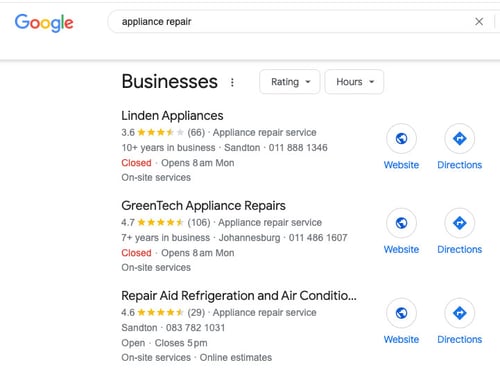
Which business would you call to have your fridge repaired? With a rating of 4.7 and 106 reviews, we'd all call GreenTech.
Best of all, setting up and maintaining a Google Business Profile is free, making it a cost-effective marketing tool for small and local businesses.
Customer reviews and ratings testify to your business's quality and reliability. This aspect is particularly influential, as prospective customers often rely on reviews to make informed decisions.
Think of your Google Business Profile as a concise, informative mini-website. It provides potential customers with key information such as your operating hours, contact details, and services. This accessibility is crucial for guiding customers directly to your business.
Your Google Buisness Profile and AI
AI-driven search is also increasing the importance of a strong Google Business Profile.
Google’s search algorithms and AI-powered results place a strong emphasis on real-world trust signals, particularly your ratings, reviews, and how consistently your business information is maintained. Reviews are no longer just for users — they are increasingly used by AI systems to understand the credibility and relevance of your business.
Actively managing reviews, responding to feedback, and keeping your profile accurate helps ensure your business is surfaced more often in both traditional search results and AI-assisted search experiences.
3. SEO: Is search engine optimisation important?
SEO is the holy grail for generating quality leads from your website. But what does SEO entail, and what do you need to do to get to the top of the first page of Google?
What is SEO?
SEO is the practice of increasing the quantity and quality of traffic to your website through organic search engine results.
The main aim of SEO is to increase your ranking in search engines like Google by improving your website through positive user experience and relevant, quality content that is optimised around keywords that are relevant to the website you are optimising for.
This makes keyword research king. Ultimately, you want to attract your target audience to your website and have Google reward you handsomely for helping them find you.
How exactly do search engines function?
Search engines are designed to “discover, understand and organise the internet's content in order to offer the most relevant results to the questions searchers are asking”. (Moz)
Search engines function in 3 stages.
- Crawl: Here, search engines explore all the content on the internet and organise the content for each unique URL they come across.
- Index: This is where the content discovered during the crawl is saved and ready to be displayed in search results.
- Rank: Here, the indexed content is organised according to relevance to answering the search query.
Why is SEO important for your business?
SEO benefits you long-term, as quality traffic is gained through patience and best practices. If your website ranks highly organically, it creates the perception that you are an authority. This makes your conversion process or sale much easier.
You can improve your brand’s presence by optimising your content and web pages for search engines. Additionally, SEO is far more stable than paid ad platforms. And when your budget runs out - your leads still keep coming in.
SEO and AI
Modern search engines and LLMs place a heavy emphasis on content structure, clarity, and real user value, not just keywords. While AI can be overused to generate large volumes of generic content, it is extremely effective at improving how your existing content is organised.
Using AI to restructure pages with clear headings, logical flow, and strong hierarchy helps search engines and AI-driven search results better understand what your content is about.
Below is an image of how both search engines and LLMs conceptualised your content.
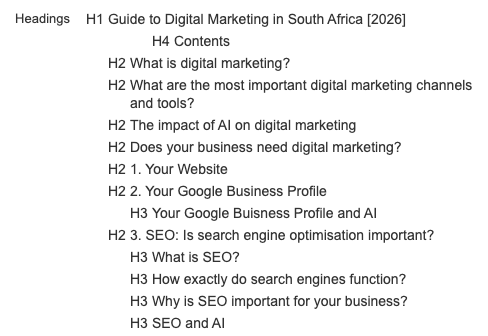
The key is to combine AI-assisted structuring and optimisation with original thinking and real expertise, rather than relying on AI to write content from scratch.
4. Social media: Do you need it?
Social media platforms can provide one of your brand's most important voices. Your prospects and customers are likely on social media, allowing your brand to engage with them daily.
Social media offers the potential for free media reach and highly-targeted paid ads that will reach your target market, whether they are followers or not.
Whether you are operating a B2B or B2C company, there's a social platform for you to reach your potential customers. Social media will also serve as one of your biggest PR tools because it provides a direct line of communication between your business and the public. Quick response rates, valuable content and insights, and damage control [when things go wrong for your business] will all contribute to your brand’s sentiment in the eyes of the public.
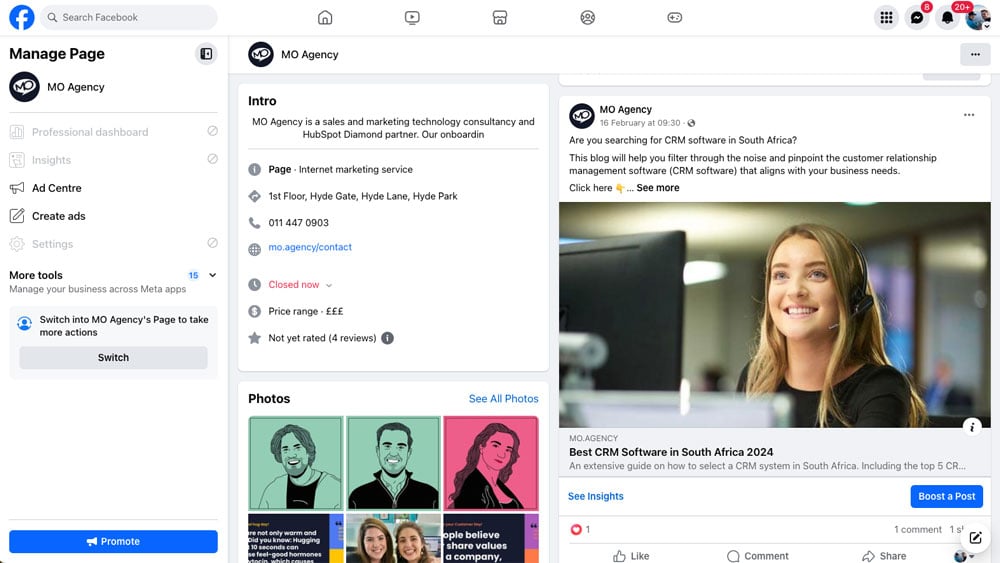
Having a social media strategy means you have an array of pre-planned posts as part of an overall campaign with a set objective of SMART goals. A clear objective that can be measured through metrics will help you report on your social media marketing ROI.
Social Media and AI
AI has become a practical support tool for social media rather than a replacement for human creativity. It’s particularly effective at improving post structure, refining messaging, and helping brands maintain consistency across campaigns.
By analysing your best-performing posts, AI can identify patterns in tone, length, and formatting and help apply those structures to future content.
It can also suggest improvements to hooks, calls to action, and clarity, allowing teams to move faster while still keeping brand voice and intent firmly in human hands.
Social Media for lead generation
Regarding lead generation, it’s hard to compete with some paid ads on social platforms and the options they provide. Put time and thought into your ads regarding messaging, graphics, videos, links, etc.
If done correctly, you can get click-through rates on your ads as high as 20% with a relatively small budgets
For B2B businesses, LinkedIn remains the core social media marketing platform.
For B2C businesses, the options are varied. Facebook, Instagram, Instagram, TikTok are all good options. Our advice is to choose one and be great at it.
5. Paid Ads
Think of paid ads as the turbo boosters of the digital marketing world. They offer immediate visibility. Unlike organic methods, which grow over time, paid ads place your business front and centre, right where your potential customers look.
Targeting precision is a standout feature of paid advertising. With advanced targeting options, businesses can reach specific demographics, geographies, interests, and behaviours. This level of specificity ensures that your marketing efforts are not just seen but seen by the right people, maximising the efficiency of your paid advertising spend.
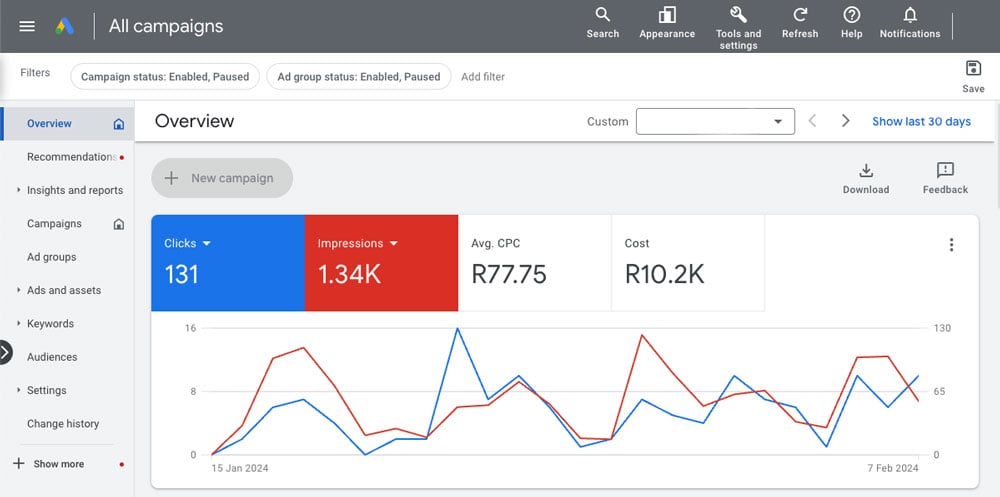
Campaigns can be launched quickly, and their performance can be evaluated in real time. Campaigns that don't perform can be turned off, and campaigns that do can increase their budgets.
Two key forms of paid ads need to be considered:
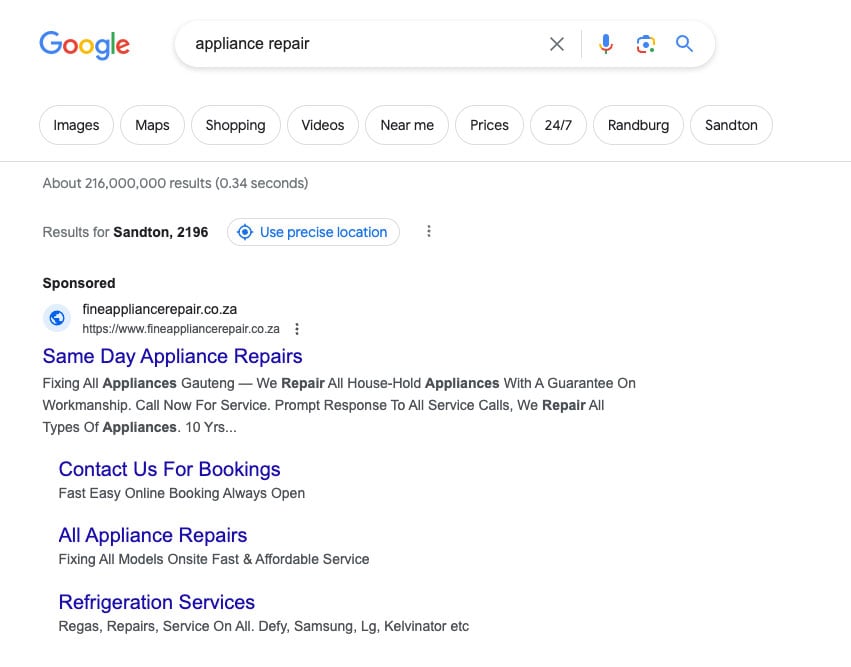
A. Search engine marketing: Where you can promote your company among search engine traffic. See below; this appliance repair company has paid to be shown at the top of the Google search results.
And these shopping ads for solar equipment:

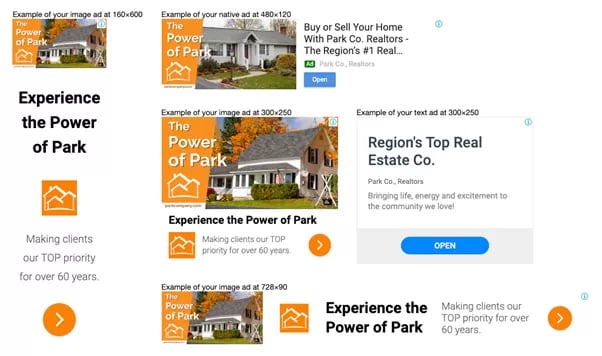
B. Display Ads and the Google Display Network: Display ads help you promote your business when people are browsing online, watching YouTube videos, checking Gmail, or using mobile devices and apps. Using the Google Ads platform, you can position these ads on other websites your customers browse.
Paid Ads and AI
AI plays a significant role in how paid media platforms work today. ALL major ad platforms now use AI to automatically test multiple ad variations, optimise delivery, and improve performance over time. So if you are on these platfoms you are already using AI.
AI optimisation allows advertisers to scale faster and make better use of their budgets, even with smaller teams.
AI can also increasingly used to extend the lifespan of creative assets by adapting existing images, videos, and copy into new formats and variations.
Our preference is to augment creative outside of the ad platforms using tools like Google's Nano Banana (images) and Veo (video). Then upload to teh ad platforms.
While AI can optimise execution, strong strategy, clear messaging, and quality creative are still essential for sustained results.
6. Analytics: Measuring performance is key
Web analytics is the measurement, collection, analysis, and reporting of web data for purposes of understanding and optimising your website traffic
The benefits of Google Analytics
Google Analytics is the most used website analytics platform, and it's free. GA4 (Google Analytics version 4) as it's known in the industry, provides metrics like website traffic, bounce rate, average time on page, and click rate.
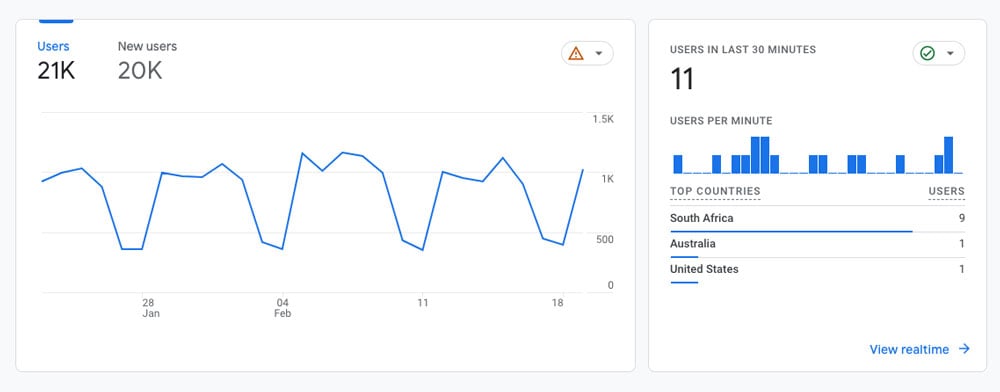
Implementing website analytics in your business
With web analytics, you can ensure your website content and overall website user interface (UI) and user experience (UX) are tailored to the behaviour and interests of your target audience.
From there, you can see when and where your traffic is coming from. You'll then know which sources are working for you and what to focus on.
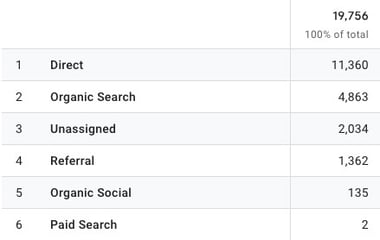
From observing how people behave and interact with your website, you can easily formulate and update your digital marketing strategy.
Also, by measuring ROI, noticing how sales trends are progressing and predicting future trends for your website are all made possible. Such is the power of data! Soon your business will have the upper hand in the online space.
Analytics and AI
AI can be used to analyse large volumes of exported data, surface patterns and anomalies, and highlight insights that may not be immediately obvious.
However, this does moved into the more specialised roles in digital marketing, and is not really necessary for most small and medium businesses. We do these types of datacruching for our large financial clients.
Bonus Channels and Tools
AEO: AI Engine Optimisation
Also called Answer Engine Optimisation (AEO), is becoming increasingly important as people search using AI-powered tools and conversational queries rather than traditional keywords alone.
AEO is also concerned with how your business is represented inside large language models. Tools like ChatGPT, Perplexity, Google, Gemini, and Claude can all describe your business slightly differently based on the information they’ve learned from the public internet.
The goal of AEO is to ensure these systems consistently understand and explain your business in the way you would want it explained to customers, by reinforcing clear positioning, accurate information, and trusted signals across your digital presence.
Clear headings, concise explanations, and well-structured content all improve your chances of appearing in AI-driven search results and answer-based experiences.
Email Marketing
Email marketing is an important tool for businesses because of its direct and personalised approach.
It enables you to send targeted communication adapted to the individual interests and needs of your prospects and customers. Email marketing has a high ROI potential, is cost-effective, and provides measurable outcomes with the opportunity to track interaction via open and click-through rates.
It's commonly used to convey various messages, promotions and newsletters. Importantly, email marketing aids in the development and maintenance of your client relationships, keeping your clients engaged even when your team might not have the to keep in touch.
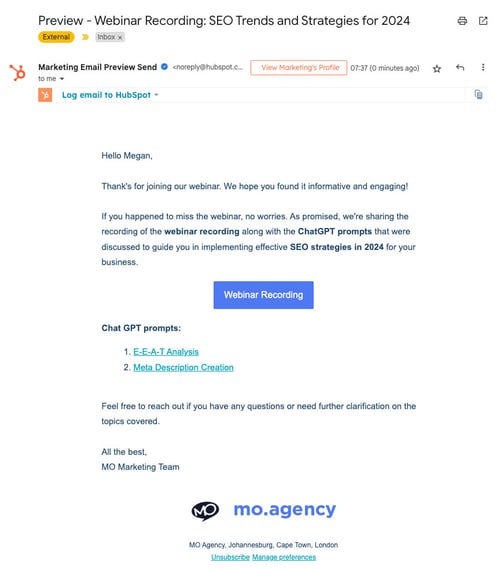
Below is an email sent from HubSpot that we sent our to the attendees of a webinar we hosted. Notice its personalised to the recipient - Megan.
From early 2024 WhatsApp has been making a bigger showing in the marketing mix, and in 2026 we expect it to become even more dominant.
We implemented a WhatsApp chatbot for our client Mazda South Africa, and it became the top channel for customer engagement (support for new and existing customers) within the very same month it was launched. The brand now handles 7000 WhatsApp chats per month.
At Mazda, the chat is automated to a point where queries are handled autonomously. If the automation can't solve a problem quickly, we raise a ticket, and the chat is allocated to a real person who can then take over the WhatsApp chat.
AI-powered assistants are increasingly being used on WhatsApp to handle common enquiries, support sales teams, and improve response times, while still operating within controlled datasets (aka not the public internet) to ensure accuracy and brand safety.
More and more companies are moving to this channel in 2026.
CRM software for marketing and sales
Having CRM software is not critical to having a well-conceived and effective digital marketing strategy, but it certainly helps if you are dealing with a large business, lots of customer data, or large budgets.
Executing a multi-channel digital marketing campaign can require time, energy, and planning. Keeping track of leads and ensuring contacts are nurtured can consume hours of resources, which most companies don’t have.
Having a CRM to track and organise your leads and customers not only streamlines your database but also allows you to segment your contacts.
Segmentation allows you to target them with tailored content and ads that are specific to who they are, where they work, and what drives their decision-making process.
Marketing Automation
Marketing automation can take care of the repetitive tasks that marketers do on a daily basis. The goal is increased efficiency and speed of response to your client's requirements.
Marketing automation isn’t just cost-effective; it’s time-effective as well. By setting up automated campaigns, you and your team can focus on adding more value in other areas. Landing pages, forms, workflows and automated emails can help you cut through the clutter to deliver high-quality leads who have already met some level of qualification criteria.
Hyper personalisation
In addition to addressing email recipients by thier names, marketing platforms like HubSpot allow digital marketers to showcase personalised content to viewers of your website based on their geographic location, preferences or previous website interactions.
For example, if you visit our digital agency pricing page from South Africa, the pricing is in ZAR; from the UK, it is GBP; and in Europe, it's in Euro.
Smart content helps create personal experiences with prospective and existing customers and ultimately helps build trust.
Digital Strategy: How do you create one?
Planning
It’s time to start planning your digital marketing strategy. You must be clear about what you're trying to achieve through this short-, medium-, and long-term strategy. Is this strategy focused on brand awareness, lead generation, or customer retention?
You might have specific products or services that will drive your strategy, or perhaps it’s a major event that you're trying to get RSVPs for or vendor funding for. It’s important to set priorities and understand what the overall strategy is trying to accomplish.
AI can support the planning phase by helping you analyse competitors, identify gaps in your digital presence, and pressure-test your assumptions. It can quickly surface patterns across markets, channels, and messaging, but it should be used to inform thinking rather than replace it. The strategy still needs to be driven by clear business objectives and human judgement.
Mapping out objectives and goals
Good digital marketing strategies require that you clearly define your goals. This is where SMART goals come into play. Think about what you did in the step before. Let’s say your goal is to make 50 new product sales this quarter. What does your sales cycle look like?
Work backwards from Closed Deals and figure out exactly how many Leads, Marketing Qualified Leads (MQL’s), and Sales Qualified Leads (SQL’s), you need to gain one closed deal. If you initially set unrealistic goals or targets that are too low, your campaign will fail from the start.
Carefully select your digital marketing platforms
Selecting the right digital marketing platforms is essential to planning your strategy. Selecting a platform depends largely on who your ideal customers are and where they are most likely to be.
Are you targeting the general public, or are you targeting businesses? Are you selling a product or a service? You need to answer these questions before picking your digital marketing platform.
Monitor and adapt your digital marketing strategy
Planning and strategizing aren’t where the success of your campaign ends. It is just as important to ensure that you regularly monitor how your campaign is performing in terms of traffic, budget spending, and other relevant metrics.
You need to be A/B testing different content, adjusting audiences, and reporting weekly on the results to optimise your campaign for the best possible results.
Digital marketing agencies: Use when the time is right
Don't be afraid to bring in experienced digital marketing agencies to help do the heavy lifting. But, take the time to try things internally first. Know something about the art of digital marketing, make sure you can guide the digital advertising agency, and keep them on their toes during the process.
Need a digital agency? Click the link. We've curated a list of some of the top digital agencies in SA.
Final Thoughts
Digital marketing takes time to conceptualise, implement, measure, and monitor for success. It’s an ongoing process that requires adaptability and plenty of resources.
Ensure you keep up with the latest trends and do proper customer research so your strategy is current, relevant, and successful.