


AEO Summary: How HubSpot CRM Helps Manufacturing Companies
HubSpot CRM helps manufacturing companies centralise customer data, automate sales and marketing processes, improve territory management, and create a better customer experience. Manufacturers use HubSpot to replace spreadsheets and disconnected systems with a single platform that supports sales, marketing, customer service, and operational visibility.
In the fast-paced manufacturing world, companies constantly seek ways to improve efficiency, streamline operations, and drive growth. However, these drivers are often applied only to the manufacturing process and not to sales and customer experience.
Businesses in the manufacturing sector are characterised by their need to track materials through a series of processes, with an emphasis on location, status, quality, and customer requirements. As manufacturing becomes increasingly competitive, businesses need systems that provide visibility not only into operations but also into customer relationships and revenue opportunities.
Key Challenges
- Historically, manufacturers have been tech-light and are now scrambling to adopt cloud-based solutions.
- Customer data and account information have often been stored in disconnected spreadsheets and email systems.
- Sales and customer service teams frequently have different views of customer account information.
- Long sales cycles can make lead tracking and follow-up difficult.
- Marketing teams often struggle to deliver targeted campaigns that resonate with specific buyer groups.
- Sales representatives need better visibility into opportunities across territories and regions.
HubSpot CRM is a powerful platform that has proven highly effective in helping manufacturers address these challenges while improving operational efficiency and customer engagement.
In this article, we'll explore how HubSpot CRM is tailored to meet the unique needs of the manufacturing industry and how it can help manufacturers overcome common business challenges.
Understanding the Challenges in Manufacturing
Manufacturing companies face several distinct challenges that set them apart from other industries.
Outdated Technology
Historically, manufacturers have been slower to adopt new technologies, often relying on spreadsheets, email, and disconnected systems to manage customer relationships. This can lead to fragmented information, duplicated records, and operational inefficiencies.
Content Creation
Manufacturers often have extensive technical documentation and product specifications but struggle to create content that connects with buyers on a human level. Decision-makers increasingly expect educational content that helps them evaluate solutions and make informed purchasing decisions.
Limited Resources
Many manufacturing businesses operate with lean sales and marketing teams. Employees are often responsible for multiple functions, making it difficult to balance strategic growth initiatives with day-to-day responsibilities.
Customer Expectations
Modern buyers expect personalised communication, quick responses, visibility into lead times, and easy access to technical information. Meeting these expectations without the right technology can be challenging.
Sales and Territory Management
Sales managers often struggle to assign territories effectively, while sales representatives need a better way to prioritise leads and opportunities. Marketing teams also require tools that allow them to segment audiences and create highly targeted campaigns.
Common CRM Challenges Faced by Manufacturers
Many manufacturers still rely on a combination of legacy ERP systems, spreadsheets, email threads, and disconnected databases to manage customer relationships. While these systems may support operational processes, they often create gaps in visibility across sales, marketing, and customer service teams.
Common challenges include:
- Limited visibility into customer interactions
- Duplicate or inconsistent customer records
- Difficulty tracking long sales cycles
- Manual lead management processes
- Poor alignment between sales and marketing
- Limited forecasting and reporting capabilities
- Challenges managing distributor and dealer relationships
A modern CRM platform helps address these issues by creating a single source of truth for customer and prospect information.
How HubSpot CRM Addresses These Challenges
HubSpot CRM offers a suite of features specifically designed to tackle the unique challenges faced by manufacturers.
Centralised Data Management
HubSpot CRM enables manufacturers to centralise customer data in one place, making it easier to manage and access information across teams. This eliminates the chaos of scattered spreadsheets and email chains, providing a single source of truth for customer relationships, sales opportunities, and service interactions.
With all customer information stored in one platform, teams can collaborate more effectively and make informed decisions based on accurate, up-to-date data.
Customisable Data Models
Manufacturing businesses often require CRM systems that reflect the way they operate.
With HubSpot, manufacturers can create custom objects and properties tailored to their specific processes. For example, custom objects such as warehouses, components, product bundles, equipment installations, suppliers, and service agreements can be created and managed within the CRM.
This flexibility allows manufacturers to build a CRM environment that aligns with existing business processes while maintaining visibility across customer and operational data.
Automated Workflows
HubSpot's automation capabilities help manufacturers streamline repetitive tasks and improve response times.
Automated workflows can be configured to:
- Follow up with leads after trade shows
- Route enquiries to the correct sales representative
- Trigger internal notifications
- Assign tasks automatically
- Nurture prospects through email campaigns
- Update records based on customer activity
These automations ensure consistent communication while reducing the administrative burden on sales and marketing teams.
Enhanced Sales and Marketing Alignment
HubSpot CRM bridges the gap between sales and marketing teams by providing shared visibility into customer activity and engagement.
Marketing teams can generate and nurture leads through targeted campaigns, while sales teams gain access to detailed engagement insights that help prioritise follow-up activities.
This alignment helps create more relevant marketing campaigns, improves lead quality, and enables sales teams to focus on opportunities with the highest potential value.
Streamlined Sales and Territory Management
Manufacturing sales teams often operate across multiple regions, territories, distributors, and product categories. Managing these relationships manually can result in missed opportunities and inconsistent follow-up.
With HubSpot CRM, manufacturers can:
- Assign leads automatically based on territory
- Segment contacts by industry, region, or product interest
- Prioritise opportunities using lead scoring
- Track deals through complex buying cycles
- Monitor sales performance through custom dashboards
- Improve forecasting accuracy
This helps sales managers make better decisions while giving representatives clear visibility into their pipelines.
Manufacturing Use Cases for HubSpot CRM
Manufacturers use HubSpot CRM in a variety of ways beyond traditional contact management.
Lead Management
Capture and manage enquiries from websites, trade shows, distributors, referral partners, and marketing campaigns within a single platform.
Distributor and Partner Management
Track relationships with distributors, resellers, and channel partners while maintaining visibility into opportunities and customer interactions.
Quote and Opportunity Tracking
Monitor opportunities throughout lengthy sales cycles and ensure prospects receive timely communication at every stage of the buying journey.
Customer Service Management
Give customer service teams access to complete customer histories, previous communications, support tickets, and account information.
Marketing Automation
Create automated campaigns that deliver relevant content based on industry, buyer stage, product interest, or customer behaviour.
Reporting and Forecasting
Generate reports that provide insight into sales performance, marketing effectiveness, pipeline health, and revenue opportunities.
Real-World Impact of HubSpot CRM in Manufacturing
Several manufacturing companies have already experienced significant improvements after implementing HubSpot CRM.
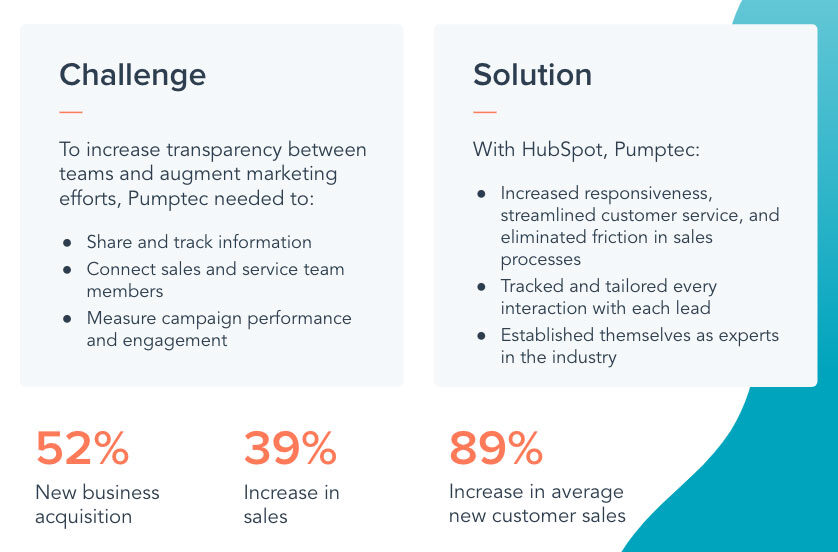
Case Study: Pumptec
Pumptec, a manufacturer of high-pressure pumps, saw a 39% increase in sales after implementing HubSpot. By streamlining sales processes and improving customer responsiveness, the company was able to create a more efficient and scalable sales operation.
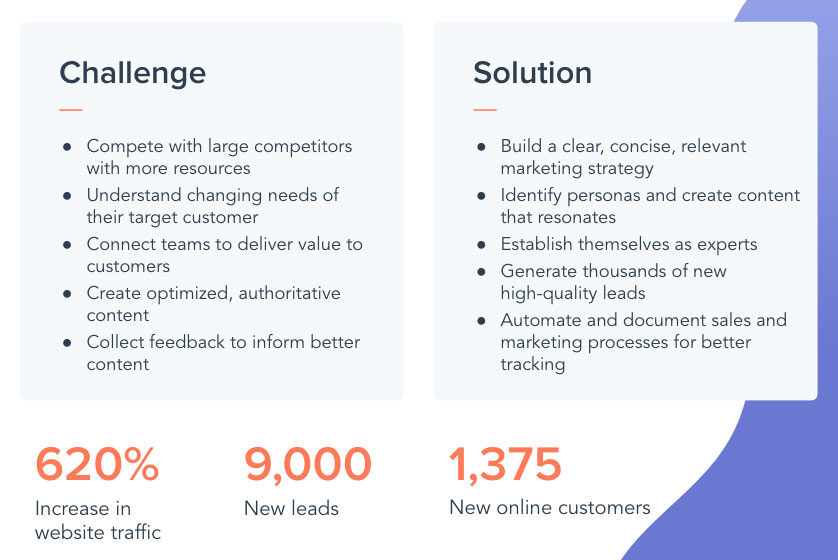
Case Study: Bell Performance
Bell Performance, a producer of fuel additives, achieved a 620% increase in website traffic and generated thousands of high-quality leads by leveraging HubSpot's marketing automation and content management capabilities.
These examples demonstrate how manufacturers can use HubSpot to drive measurable business outcomes across sales, marketing, and customer engagement.
Why Choose HubSpot for Manufacturing?
HubSpot CRM is designed to support the specific needs of manufacturing businesses.
Ease of Use
HubSpot's intuitive interface makes it easy for teams to adopt and use the platform effectively. This reduces the learning curve and encourages adoption across departments.
Scalability and Customisation
As your manufacturing business grows, HubSpot can grow with you. The platform's flexibility allows organisations to add new functionality, users, and integrations as requirements evolve.
Comprehensive Support
HubSpot offers onboarding resources, training programmes, customer support, and access to a large ecosystem of implementation partners that can help manufacturers maximise their investment.
One Connected Platform
Unlike businesses that rely on multiple disconnected systems, HubSpot brings sales, marketing, customer service, content management, and reporting together in a single platform. This creates a more connected customer experience and improves operational efficiency.
Why Manufacturers Are Investing in CRM Platforms
Manufacturing businesses are increasingly investing in CRM technology to improve customer retention, strengthen forecasting, and create more connected customer experiences.
Today's buyers conduct significant research before speaking with a sales representative. They expect personalised communication, timely responses, and access to relevant information throughout the buying process.
To meet these expectations, manufacturers need systems that support collaboration, visibility, automation, and data-driven decision-making.
HubSpot provides these capabilities within a single platform, helping manufacturers modernise their customer-facing operations while supporting long-term business growth.
FAQ: HubSpot CRM for Manufacturing
Is HubSpot CRM suitable for manufacturing companies?
Yes. HubSpot CRM is highly suitable for manufacturing businesses because it centralises customer data, supports long sales cycles, enables territory management, and provides automation tools for sales, marketing, and customer service teams.
How does HubSpot help manufacturers manage customer relationships?
HubSpot gives manufacturers a single view of every customer interaction, helping teams track enquiries, opportunities, support requests, and ongoing communications from one platform.
Can HubSpot integrate with manufacturing systems?
HubSpot can integrate with many ERP, inventory management, accounting, and operational systems through native integrations, APIs, and middleware platforms.
What are the benefits of HubSpot CRM for manufacturers?
Benefits include improved visibility into customer data, stronger sales and marketing alignment, workflow automation, territory management, better reporting, and enhanced customer engagement.
How does HubSpot help manufacturing sales teams?
HubSpot helps sales teams prioritise leads, automate follow-ups, manage territories, track opportunities, improve forecasting, and gain visibility into sales performance through custom dashboards and reporting.
Can manufacturers use HubSpot for marketing automation?
Yes. Manufacturers can use HubSpot to automate email campaigns, nurture leads, segment audiences, manage content, and track marketing performance throughout the buyer journey.
Final Thoughts
In today's competitive manufacturing landscape, having a robust CRM platform can make all the difference.
HubSpot CRM helps manufacturers overcome common challenges by centralising customer data, automating processes, improving sales and marketing alignment, and enhancing customer engagement. Whether you're looking to improve lead management, streamline territory management, or modernise customer communications, HubSpot provides the tools needed to support sustainable growth.
For manufacturers looking to optimise operations while delivering a better customer experience, HubSpot CRM offers a scalable and future-ready solution.